
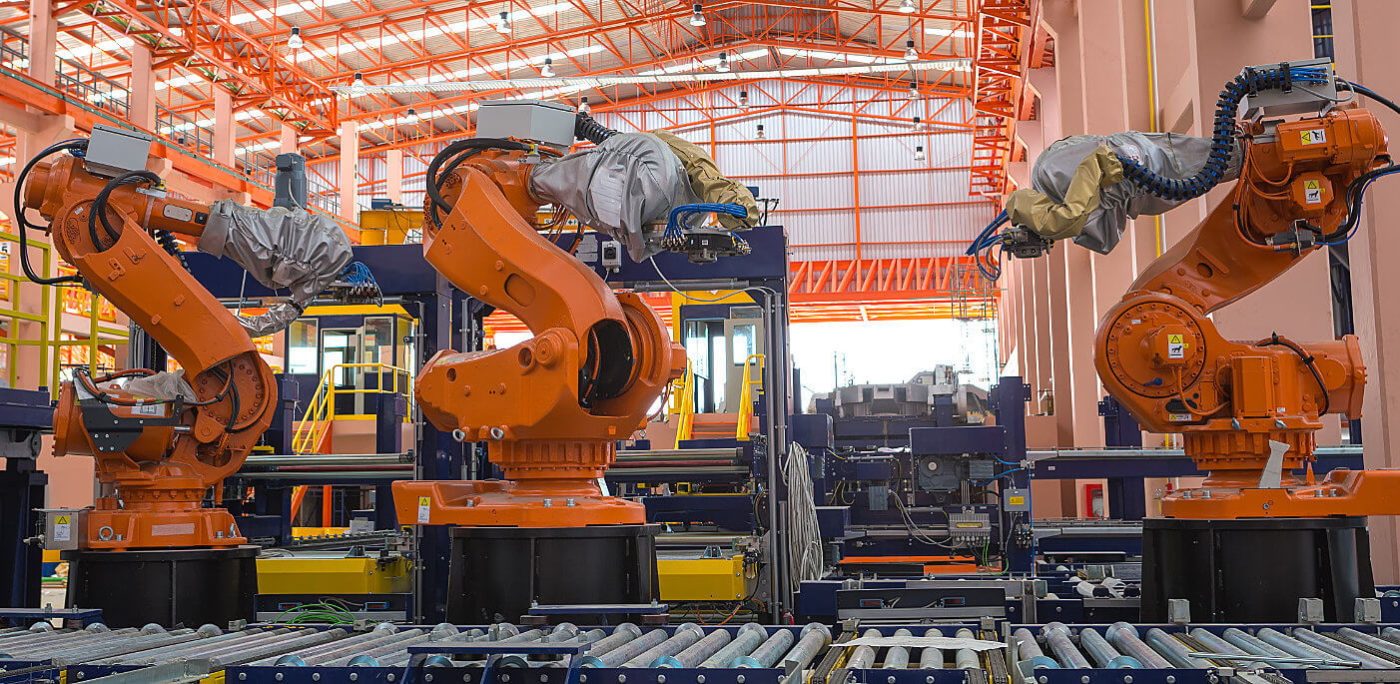
Two years ago, 40% of companies had no plans to deploy robotics in their warehouses. According to the latest Intralogistics Robotics Survey from Peerless Research Group, MHI, and The Robotics Group, that number has dropped to just 8%. The message is clear: warehouse automation is no longer a future plan — it's happening now.
But here's what often gets missed in the automation conversation: robots don't operate in a vacuum. Every autonomous mobile robot (AMR), robotic pick-and-place arm, and automated guided vehicle (AGV) depends on a material handling infrastructure that keeps goods flowing between stations. And that's where passive components like ball transfer units play a critical role.
The 92% Shift: Why Now?
Several forces are accelerating robot adoption across warehouses and distribution centers:
- Labor shortages continue to squeeze the logistics industry. The Bureau of Labor Statistics reports over 500,000 unfilled warehouse positions nationwide.
- E-commerce growth is pushing throughput demands beyond what manual operations can handle. Same-day and next-day delivery expectations require faster, more consistent workflows.
- Falling robot costs and the rise of robotics-as-a-service (RaaS) models have made automation accessible to mid-size operations, not just enterprise players.
- Nearshoring trends, particularly from Mexico and other North American manufacturing hubs, are increasing domestic distribution volume and putting pressure on warehouse capacity.
Robots Need Infrastructure to Perform
A warehouse robot is only as good as the environment it operates in. When an AMR picks up a parcel from a conveyor line, something has to position that parcel correctly. When a robotic arm transfers a load between workstations, the receiving surface needs to handle omni-directional movement without snagging or jamming.
This is where ball transfer units come in. Installed at merge points, sorting stations, packing tables, and load-building areas, ball transfers provide frictionless, 360-degree movement that keeps items flowing regardless of orientation. They're the interface layer between robotic precision and physical product movement.
Robots handle the intelligence; ball transfers handle the physics. A system that actually works at production speed needs both.
Key Integration Points for Ball Transfers in Automated Facilities
1. Robot-to-Conveyor Handoff Zones
When AMRs deliver loads to conveyor lines, ball transfer tables at the handoff point allow the load to be repositioned and oriented without manual intervention. Stud mount ball transfers are the most common choice here, offering load capacities from 75 to 350 lbs and easy replacement.
2. Automated Sorting Stations
High-speed sorting requires parcels to change direction rapidly. Spring-loaded ball transfers retract below the conveyor surface until needed, then pop up to redirect items — a perfect complement to diverter mechanisms controlled by robotic systems.
3. Packing and Assembly Workstations
Where collaborative robots (cobots) assist human workers, flange mount and disk mount ball transfers installed in worktable surfaces let operators spin and reposition items with one hand while the cobot handles the other side.
4. End-of-Line Palletizing
Robotic palletizers build layers on ball transfer tables before placing them onto pallets. Machined stud mount and machined press units are the go-to for these heavy-duty applications, with load capacities up to 500 lbs per unit.
Planning Your Infrastructure Upgrade
If your facility is adopting — or expanding — robotic automation, now is the time to audit your passive material handling infrastructure. A few questions to consider:
- Where do items need to change direction between automated and manual processes?
- What load capacities are required at each transfer point?
- Do you need corrosion-resistant (stainless steel) or standard (carbon steel) units for your environment?
- Are there areas where spring-loaded, retractable units would reduce jams?
Ready to Automate Smarter?
Our team can help you identify the right ball transfer configuration for every handoff point in your automated facility. We've spent 20+ years matching the right units to the right applications.
Request a QuoteThe Bottom Line
The surge in warehouse robotics isn't just about buying robots. It's about building the physical infrastructure that lets those robots perform at their potential. Ball transfer units are a small component with an outsized impact on throughput, reliability, and system uptime.
Whether you're retrofitting an existing facility or designing a greenfield automated warehouse, getting the passive material handling layer right from the start will save you headaches — and money — down the line.